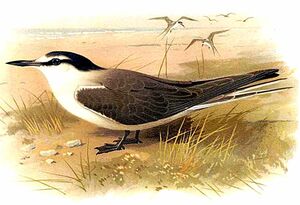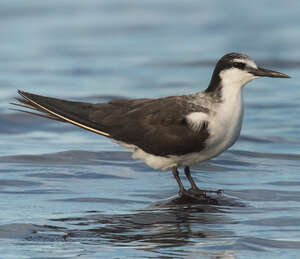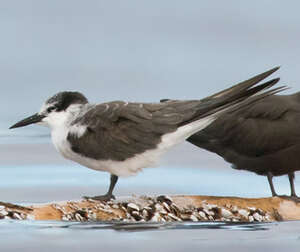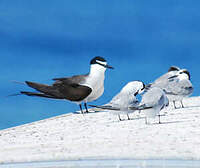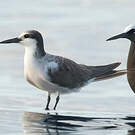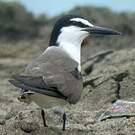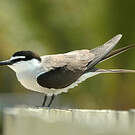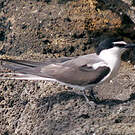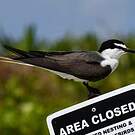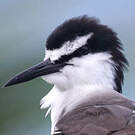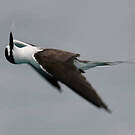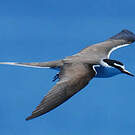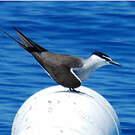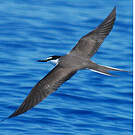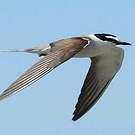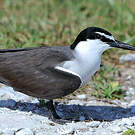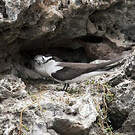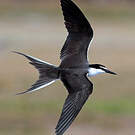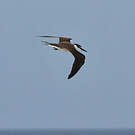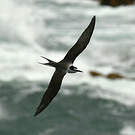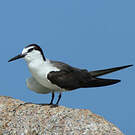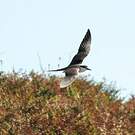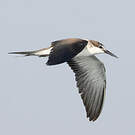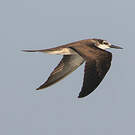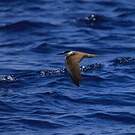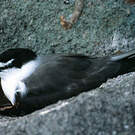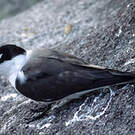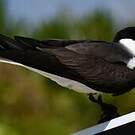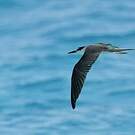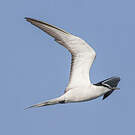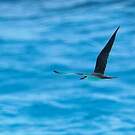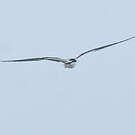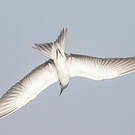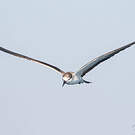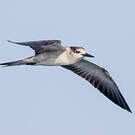
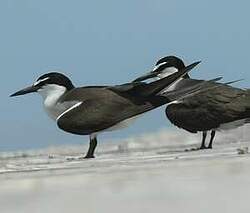
Bridled Tern
Systematics
- Order Charadriiformes
- FamilyLaridés
- GenusOnychoprion
- Speciesanaethetus
Statut de conservation
LCPréoccupation mineureForeign names
- Sterne bridée,
- Charrán embridado,
- gaivina-de-dorso-castanho,
- Zügelseeschwalbe,
- álarcos csér,
- Brilstern,
- Sterna dalle redini,
- tygeltärna,
- Tøyleterne,
- rybár tmavokrídly,
- rybák uzdičkový,
- Brilleterne,
- ohjasnokitiira,
- Brilseeswael (Brilsterretjie),
- xatrac embridat,
- Taumþerna,
- rybitwa brunatnogrzbieta,
- brūnspārnu zīriņš,
- rjavoperuta čigra,
- Бурокрылая крачка,
- Dara-laut batu,
- マミジロアジサシ,
- 褐翅燕鸥,
- นกนางนวลแกลบคิ้วขาว,
- 白眉燕鷗,
Nomenclature
Le nom scientifique Onychoprion anaethetus a été décrit par Scopoli en 1786 dans Del. Flor. Faun. Insubr. 2 p. 92.
Notes taxonomiques (IUCN) : Onychoprion anaethetus (del Hoyo and Collar 2014) was previously placed in the genus Sterna.
Sous-espèces (4) :
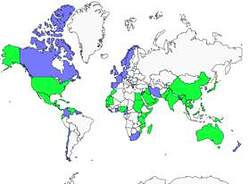
- Onychoprion anaethetus anaethetus (tropical and subtropical e Indian and w Pacific oceans: islands w of Thailand and Malaysia, in Indonesian Arch., Okinawa and Yaeyama is.. Ryukyu Is.=Nansei Shoto, s Japan. , Taiwan, islands off e China, Philippines, New Guinea and w, n, ne Australian satellites, Admiralty Is. (nw Bismarck Arch.), Rennell (s Solomon Is.), New Caledonia and Fiji (sw Polynesia) to Samoa (c Polynesia))
- Onychoprion anaethetus melanopterus (islets throughout Caribbean Sea from Bahamas. formerly also Pelican Shoal, Florida Keys. , e Yucatan Pen., e Belize, Bay Is. (n of c Honduras) to Lesser Antilles and n Venezuela and Tobago; off s Morocco, Mauritania, Senegal and Gulf of Guinea is. (nw, wc Africa))
- Onychoprion anaethetus antarcticus (tropical Indian Ocean islands: Red Sea, Persian Gulf, Somalia to Tanzania, smaller Inner Is.. ne Seychelles. and Barren I. (w of c Madagascar, w Indian Ocean); Chagos Arch. (nc Indian Ocean), Lakshadweep (w of c India), Vengurla Rocks (w of s Maharashtra, w India), and Adam's Bridge islands (between India and Sri Lanka))
- Onychoprion anaethetus nelsoni (islets w of Nayarit and Guerrero. wc Mexico. , Gulf of Fonseca (w of Honduras), Guanacaste (nw Costa Rica), Los Frailes del Sur (off sc Panama) and Islote Pelado (off sw Ecuador))
Identification
Confusion possible
Habitat
Données complémentaires AVONET 2023
| Habitat | eaux côtières, nichant sur des îles généralement dans des zones rocheuses ou sur du corail, occasionnellement sur le sable, mais généralement dans des crevasses, sur des rebords, ou partiellement dissimulé (reproduction) ; eaux pélagiques (en dehors de la reproduction) ; îles rocheuses ou coralliennes ; milieu marin |
|---|---|
| Densité | milieux ouverts |
| Mode de vie | diurne ; terrestre |
| Altitude | à 5 m |
Pelagic, Subtidal Rock and Rocky Reefs, Subtidal Loose Rock/pebble/gravel, Subtidal Sandy, Subtidal Sandy-Mud, Macroalgal/Kelp, Seagrass (Submerged)Epipelagic (0-200m), Mesopelagic (200-1000m)Rocky Shoreline, Sandy Shoreline and/or Beaches, Sand Bars, Spits, Etc, Shingle and/or Pebble Shoreline and/or Beaches, TidepoolsSea Cliffs and Rocky Offshore Islands
Dietfeeding habits
Données complémentaires AVONET 2023
| Niveau trophique | carnivore |
|---|---|
| Niche trophique | prédateur aquatique |
| Niche de recherche | plongeon depuis les airs |
| Alimentation | vertébrés, poissons, charognes |
Reproduction nesting
Données complémentaires AVONET 2023
| âge première reproduction | 4 ans |
|---|---|
| Ponte | 1 oeuf |
| Incubation | 29 jours |
| Envol | 50 à 65 jours |
| Tentatives par an | 1 |
| Système reproducteur | monogamie (<5 % de polygynie) |
| Parade | parades surtout aériennes, non acrobatiques |
| Masse de l’oeuf | 20 g |
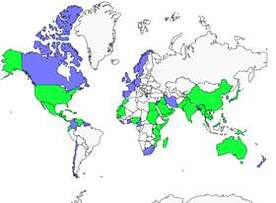
Geographic range
Threats - protection
IUCN conservation status
concern
in the Wild
threatened
evaluated
Phylogénie
Voici les 6 plus proches parents évolutifs de Onychoprion anaethetus, d'après l'arbre phylogénétique BirdTree (Jetz et al. 2012). L'âge indiqué (en millions d'années, Ma) correspond à l'époque où les deux lignées se sont séparées d'un ancêtre commun.
Explorer Onychoprion anaethetus sur l'arbre du vivant OneZoom
Sources of information
- IOC World Bird List (v15.1), Gill, F and D Donsker (Eds). 2025-12-07.
- Avibase - The World Bird Database, Lepage, D.
Other sources of interest
- Birdlife — BirdLife International, BirdLife International
- Xeno-Canto
- IUCN Red List — IUCN Red List of Threatened species, IUCN
- GBIF — GBIF / Global Biodiversity Information Facility
- Wikidata — Wikidata, la base de connaissances libre, Wikimedia Foundation
- Encyclopedia of Life — Encyclopedia of life, Encyclopedia of Life
- NCBI Taxonomy — NCBI Taxonomy Database, National Center for Biotechnology Information
- eBird — eBird, Cornell Lab of Ornithology et National Audubon Society
- Birds of the World — Birds of the World, The Cornell Lab of Ornithology
- TaxRef (INPN) — Inventaire national du patrimoine naturel (INPN), MNHN - INPN
- Accipitriformes
- Aegotheliformes
- Anseriformes
- Apodiformes
- Apterygiformes
- Bucerotiformes
- Caprimulgiformes
- Cariamiformes
- Casuariiformes
- Charadriiformes
- Ciconiiformes
- Coliiformes
- Columbiformes
- Coraciiformes
- Cuculiformes
- Eurypygiformes
- Falconiformes
- Galliformes
- Gaviiformes
- Gruiformes
- Leptosomiformes
- Mesitornithiformes
- Musophagiformes
- Nyctibiiformes
- Opisthocomiformes
- Otidiformes
- Passeriformes
- Pelecaniformes
- Phaethontiformes
- Phoenicopteriformes
- Piciformes
- Podargiformes
- Podicipediformes
- Procellariiformes
- Psittaciformes
- Pterocliformes
- Rheiformes
- Sphenisciformes
- Steatornithiformes
- Strigiformes
- Struthioniformes
- Suliformes
- Tinamiformes
- Trogoniformes