Welcome to the Ornithological Portal Oiseaux.net
- Thousands of documents are easily accessible. No matter how advanced their level may be, all curious ornithologists are sure to find there the information they need, to learn how to identify species, to get to know better both their characteristics and their behaviour,...
- Get access to «Species» pages through bird lists (Birds of France, Birds of Europe Birds of the World) These lists come either in an alphabetical or a systematical order.
- Find the name of a bird by means of our search engine for easy identification.
- Take a look at numerous articles, games, books.
- Ask questions or share your experience on our forum.
Latest sheets
-

This small bird measures 12 cm in length. The male has a distinct crest, like the other 3 species of the genus that was formerly all together. The front of the head, including dark eyes, is black, except in its symmetry. Behind the black is a light beige collar from the back of the head to the chest (white in the other 3 species). A black mark marks the light forehead that continues into a narrow, high crest, light reddish, becoming blackish on the back of the Buffy Helmetcrest's (Colibri de Stübel) crown. Under the black, ... read more (Rédigé par Jean François)
-

The Sand Martin is a small brown swallow, entirely brown on the top, white and brown underneath, very closely linked to water. I specify the habitat because another brown swallow frequents our countries, the Rock Dove, but this one frequents wild rocky habitats.On the perched bird, the slightly fork-tailed tail ends up at about the same level as the tip of the wings. There are no nets. On the top of the chest, a wide brown collar separates the white throat from the rest of the white underside of the body. The eye, the beak ... read more (Rédigé par Jean François)
-

Garganey is a small, surface-feeding duck, slightly larger than its cousin, the Winter Garganey. The adult male can be recognised at first glance by its long white eyebrow going up to the neck, tapering off, outlined by the blackish cap and highlighted by the vine-coloured cheeks. To identify the rest, just look at a beautiful profile photo showcasing the finely grey speckled white flanks and the long grey scapulars above them. In flight, the wings display their attraction. Above, the grey covert feathers of the arm precede ... read more (Rédigé par Jean François)
The latest pictures
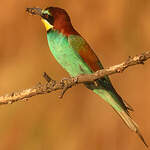
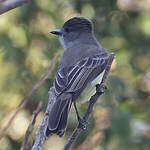
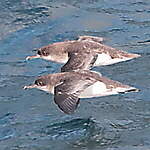
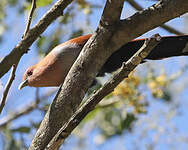
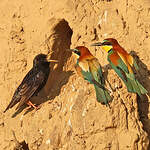
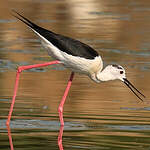
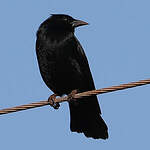
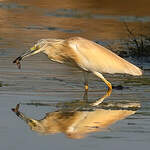
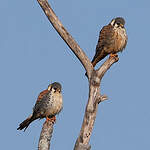
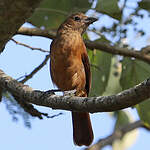
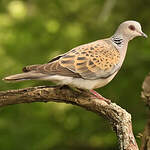
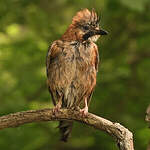
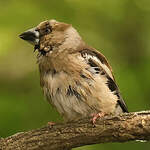
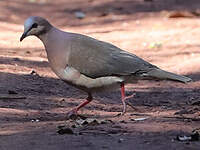
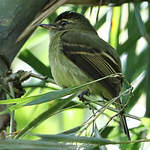
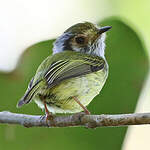
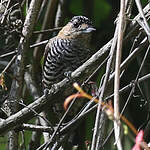
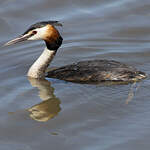
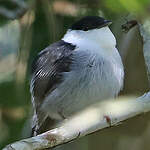
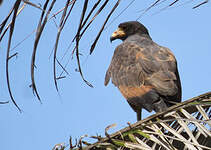
The latest articles
-

Un ornithologue, professionnel ou amateur, se doit de connaitre les émissions sonores des oiseaux, cris, chants et autres (tambourinage des pics par exemple). Il doit pouvoir mettre un nom d'espèce sur un son entendu. L'ornithologue débutant doit acquérir cette compétence s'il veut progresser et ce n'est pas chose facile. C'est un long apprentissage. Au début, il devra voir l'oiseau qu'il entend pour associer les deux sens jusqu'à ce que ce lien soit acquis et devienne un automatisme. A terme, il n'aura plus besoin de voir ... lire la suite
(Un article de Jean François)
-
Oiseaux.net s'appuie sur une nomenclature rigoureuse pour structurer et présenter les informations relatives aux espèces d'oiseaux. Classification taxonomique La classification des oiseaux suit les standards internationaux définis par des institutions scientifiques reconnues telles que l'IOC (International Ornithologists' Union) et la Clements Checklist. Chaque espèce est répertoriée selon la hiérarchie taxonomique suivante : Règne : Animalia (Règne animal) Embranchement ou Phylum : Chordata (Chordés) Classe : Aves ... lire la suite
-

par Jean FRANçOIS, aidé de Dominique MARQUES pour la finalisation à destination du forum. Avant-propos : Qui ne s’est jamais questionné sur l’identité d’un pouillot explorant activement et en silence le feuillage d’un ligneux en dehors de la période de reproduction ? Probablement peu d’entre nous. C’est pour aider à l’identification de nos deux pouillots communs, le véloce et le fitis, que ce papier a été conçu. Il est bien évident qu’en période de reproduction, les émissions ... lire la suite
(Un article de Jean François)
Oiseaux.net, shows to date :
- 10,892 taxons (98% of known species) illustrated with one document at least.
- 410 contributors (43 editors and 385 illustrators) ; 5,7 million visits per year.
-
Number of documents Number and percentage of species Sheets 3,312 3,312 29% Photos 9,502 336,610 9,850 85% 53% Drawings 12,213 5,447 49% Sounds 176,578 10,509 94%