
Ce printemps, les oiseaux chantent librement.
Aidez Oiseaux.net à rester libre, gratuit et sans pub.
Eurasian Siskin
Spinus spinus - Tarin des aulnes
Systematics
-
Order:
Passeriformes
-
Family:
Fringillidés
-
Genus:
Spinus
-
Species:
spinus
Descriptor
Biometrics
- Size: 12 cm
- Wingspan: -
- Weight: 13 g
Longevity
11 years
Geographic range

Identification
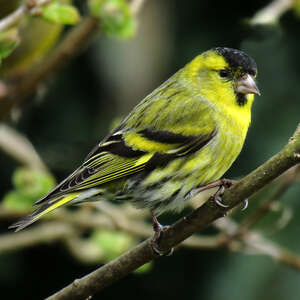
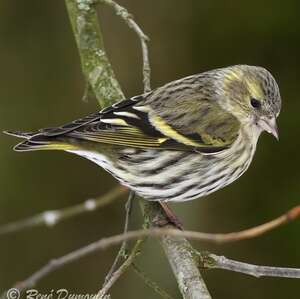
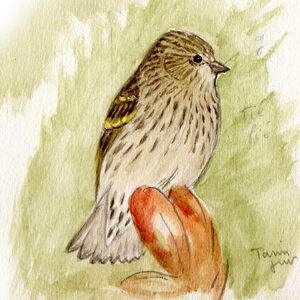
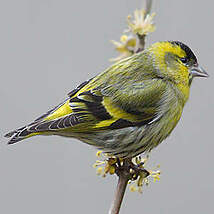
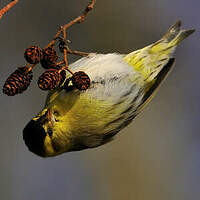
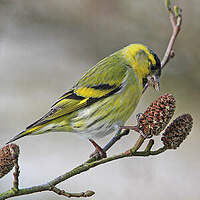
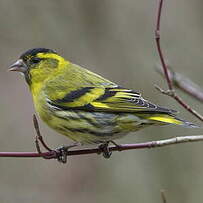
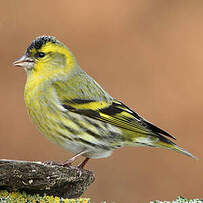
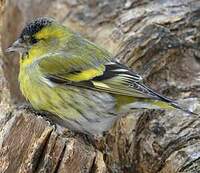
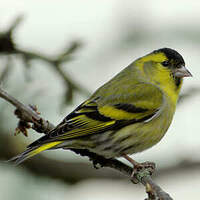
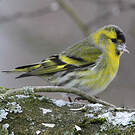
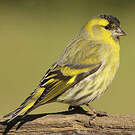
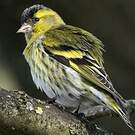
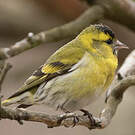
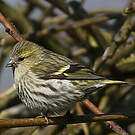
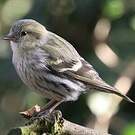
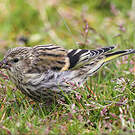
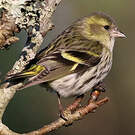
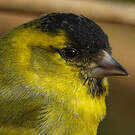
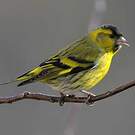
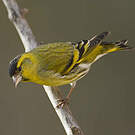
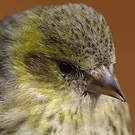
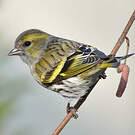
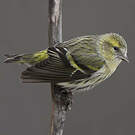
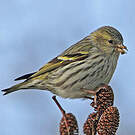
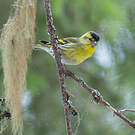
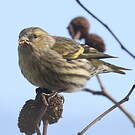
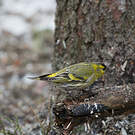
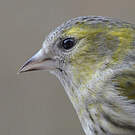
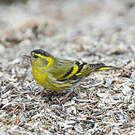
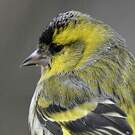
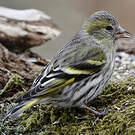
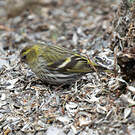
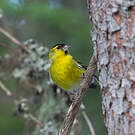
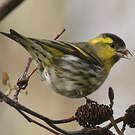
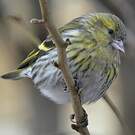
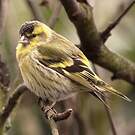
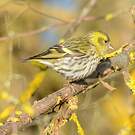
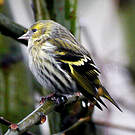
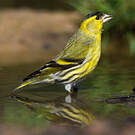
The Eurasian Siskin is a small finch, smaller than a chaffinch. It is a bird of northern Europe and the southern mountains, and a common winter visitor to France. The adult male is recognized by the yellow which is present throughout its plumage, but not uniformly. The yellow is particularly bright on the sides of the head, the wing coverts, the rump and the tail. The underparts are also yellow, with varying degrees of black streaking depending on the individual. Some are heavily streaked on the flanks, while others have none at all, possibly related to their age. The mantle is mostly olive-coloured. When seen from the front, the cap, forehead, lores and chin are black, a secondary sexual characteristic. The beak is a horn-coloured, cone-shaped and pointed. The legs are reddish-brown. The adult female is substantially different. Firstly, she has no black on her head. Secondly, although having the same overall pattern of plumage, she is much less yellow than the male, being paler. The brightest yellow is on the rump. She is heavily streaked with black on the cap, mantle and all the underparts. The bare parts are the same as the male. The juvenile is even less colourful and more heavily streaked than the female. The yellow is present only on the wings (edging the primaries) and on the tail. The mantle is tawny with black streaking. The reddish tips to the median and larger coverts form two distinct wingbars. The beak is darker.
Subspecific information monotypic species
Foreign names
- Tarin des aulnes,
- Jilguero lúgano,
- lugre-comum,
- Erlenzeisig,
- csíz,
- Sijs,
- Lucherino,
- grönsiska,
- Grønnsisik,
- stehlík čížik,
- čížek lesní,
- Grønsisken,
- vihervarpunen,
- lluer eurasiàtic,
- Barrfinka,
- czyż (zwyczajny),
- ķivulis,
- čižek,
- Чиж,
- マヒワ,
- 黄雀,
- grönsiska,
- 黃雀,
Voice song and call
The call is typical but difficult to transcribe. It consists of a tuui or tsuui or even tsiiu followed by a few low, dry and rushed notes tche tche tche. These last ones are particularly typical. They are somewhat reminiscent of their equivalent among Eurasian Siskins. The tuui alone is a contact call. The song is a typical finch babble, elaborate but unreadable, and when all the males of a flock perched in a tree start singing, it produces a rather melodious sound concert.
Habitat
I will only talk about the situation in the west of the Eurasian continent. The Eurasian Siskin is a frequent visitor of boreal coniferous forests as well as of high areas.
Behaviour character trait
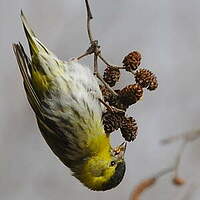
Several elements draw attention to this species, firstly its distinctive little call, then the male's yellow plumage, its habit of gathering in compact groups and frequenting alder stands.
Flight
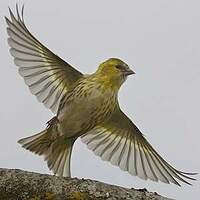
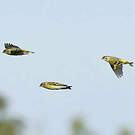
The flight of the Eurasian Siskin is a typical finch flight, undulate. It does not have the heaviness of that of a chaffinch and the small size of the bird makes its flight a bit bouncy. Its large wings are put to profit by migrants of the northern part of its area who have a lot of km to cover. The nuptial flight is a rapid flight with particular beats, like mechanical, wings held rigid.
Dietfeeding habits
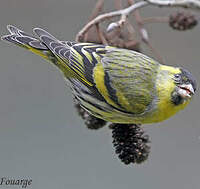
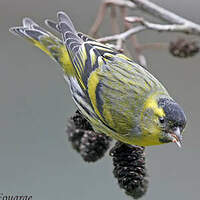
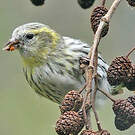
The Eurasian Siskin is primarily a granivore. In Europe during winter, it is well-known for its strong dependence on alders and their numerous small seeds.
Reproduction nesting
The breeding season runs from late February to August. The Eurasian Siskin is monogamous and nests either alone or in small loose colonies in suitable forests.
Geographic range

The breeding range of the Eurasian Siskin is split into two parts. In the west, a plains population occupies northern Europe and western Russia to approximately northern Mongolia and a southern population inhabits coniferous forests of southern European mountains. Most Fenno-Scandian and Russian siskins are migratory and winter in western and southern temperate Europe, Asia Minor, and a bit in the Maghreb. A Caucasian population is resident. In the east, a population is found in southeastern Russia, the far northeast of China and on Sakhalin Island. All of these birds are migratory and winter in Japan, the Korean peninsula, and eastern China.
Threats - protection
IUCN conservation status
concern
in the Wild
threatened
evaluated
This species is common and not threatened. It has been observed to be expanding in several European countries. If there are any problems, they could only be seen in the southern population centers due to the very hot and dry summers experienced in recent years.
Sources of information
- IOC World Bird List (v15.1), Gill, F and D Donsker (Eds). 2025-12-07.
- Finches and Sparrows, Peter Clement
- Monographie des Fringilles (vol 1), Michel Ottaviani
- Les passereaux d'Europe, tome 2, P. Géroudet, M. Cuisin
- Avibase, Lepage Denis
- Birds of the World, The Cornell Lab of Ornithology
- xeno-canto, Sharing bird sounds from around the world,
Other sources of interest
 Specification sheet created on
16/07/2023 by Jean François
Specification sheet created on
16/07/2023 by Jean FrançoisTranslation by AI Oiseaux.net
© 1996-2026 Oiseaux.net
- Accipitriformes
- Aegotheliformes
- Anseriformes
- Apodiformes
- Apterygiformes
- Bucerotiformes
- Caprimulgiformes
- Cariamiformes
- Casuariiformes
- Charadriiformes
- Ciconiiformes
- Coliiformes
- Columbiformes
- Coraciiformes
- Cuculiformes
- Eurypygiformes
- Falconiformes
- Galliformes
- Gaviiformes
- Gruiformes
- Leptosomiformes
- Mesitornithiformes
- Musophagiformes
- Nyctibiiformes
- Opisthocomiformes
- Otidiformes
- Passeriformes
- Pelecaniformes
- Phaethontiformes
- Phoenicopteriformes
- Piciformes
- Podargiformes
- Podicipediformes
- Procellariiformes
- Psittaciformes
- Pterocliformes
- Rheiformes
- Sphenisciformes
- Steatornithiformes
- Strigiformes
- Struthioniformes
- Suliformes
- Tinamiformes
- Trogoniformes